

How a Moriarty dial is made
The art of Grand Feu enamel
Each and every Moriarty watch is individually crafted, ensuring uncompromising attention to every detail. Using traditional techniques and hand-finishing our creations are not only functional timepieces, but also works of art.
Preparing the enamel
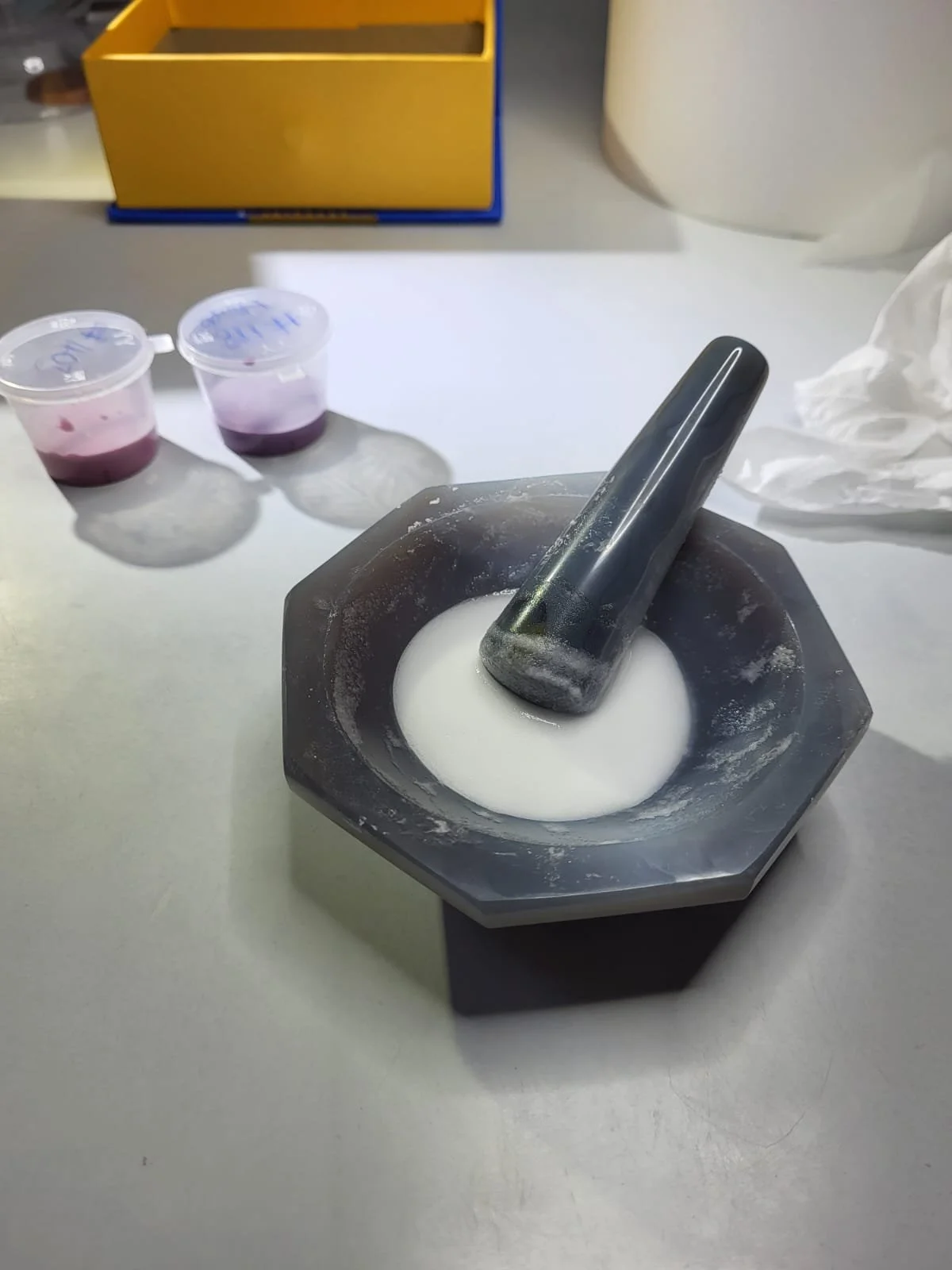
The first step for every watch we create is carefully selecting and mixing the enamels which will become the surface of each dial.
Mixing enamels precisely with water and grinding by hand the process is repeated until Alison is satisied the enamel is pure enough to be used for her dials
Applying the enamel
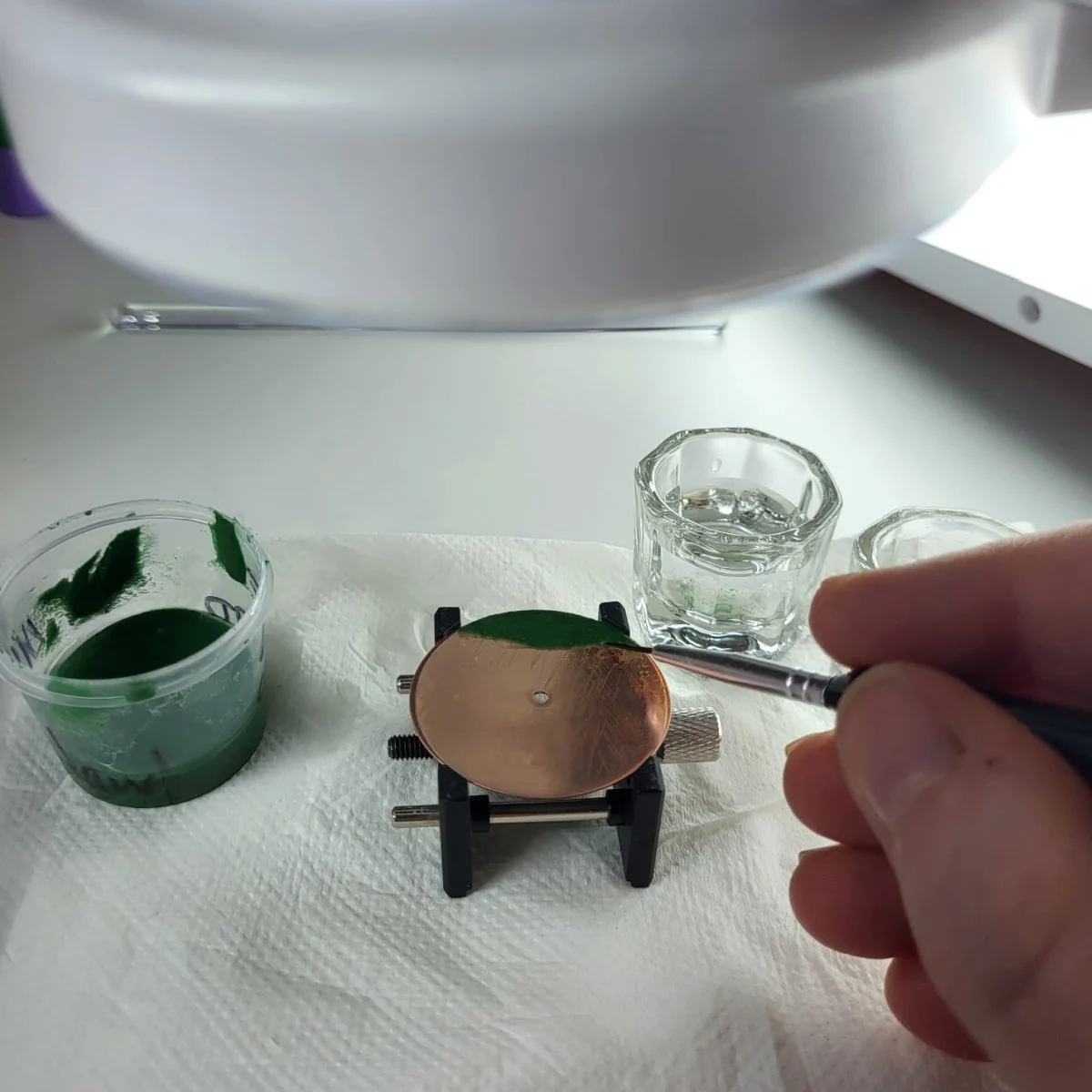
Once Alison prepares the enamel mixture, the next step is to apply it to the dial. This is done with a fine brush and care is taken to ensure that the wet enamel is applied evenly across the pre cleaned pure silver surface and then repeated after firing.
Alison strives for perfection in keeping with the charactor of the enamels she uses.
“Enamel is a challenging material that has inner beauty that I try to bring forth in every piece that I make!”
Firing the enamel
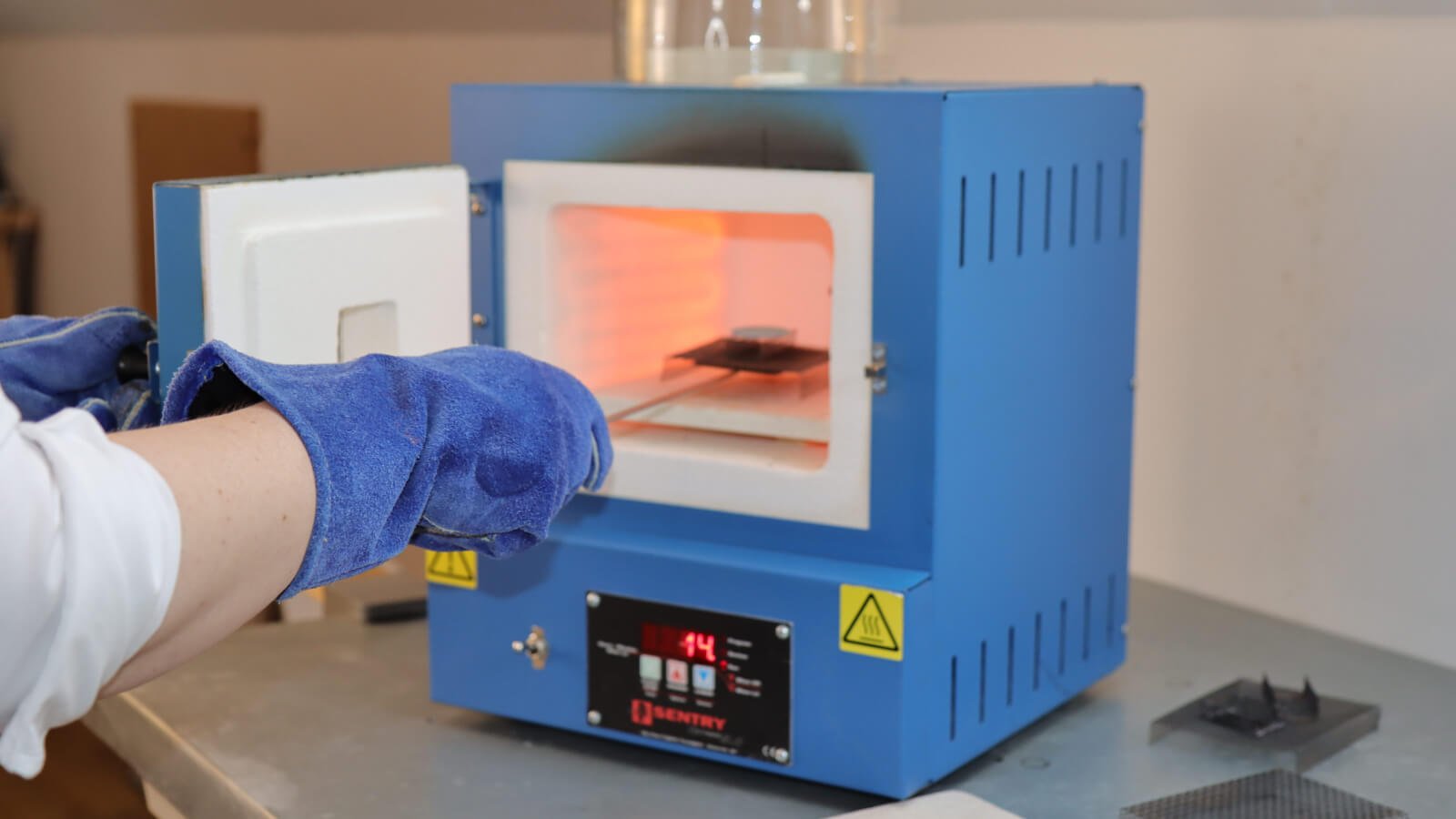
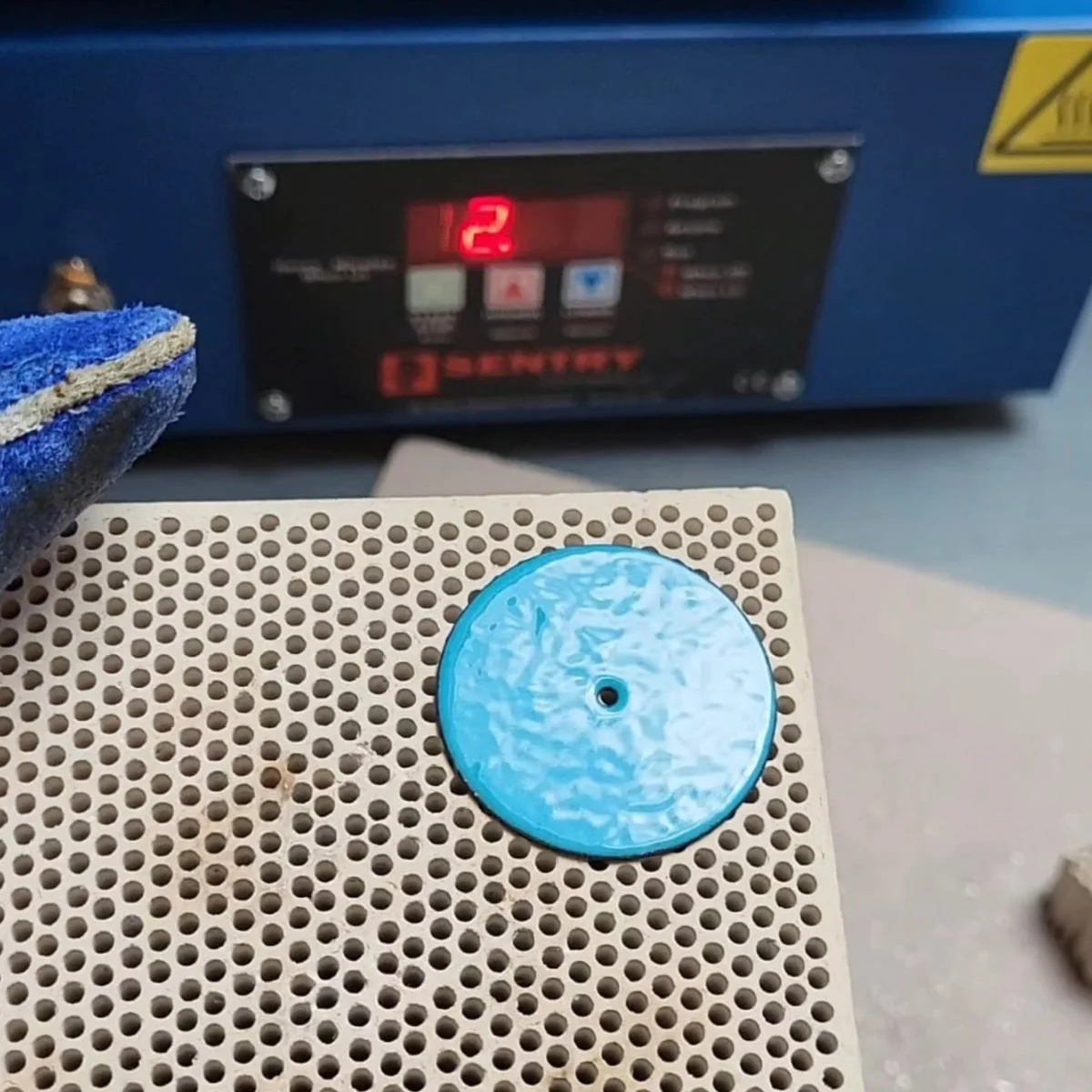
Now that we have our dial ready for firing, it’s into the kiln it is placed. The dial is fired at approximately 800ºC and then being allowed to cool down will we see the true enamel colour. The process is then repeated until the enamel is even and of sufficient height.
Now the enamel is sanded by hand until it is even taking over 10 hours to achieve and then final fired to finish.
It doesn’t take a large margin for error for a dial to crack, or an imperfection to become obvious, and then it’s back to square one.
Printing the dial
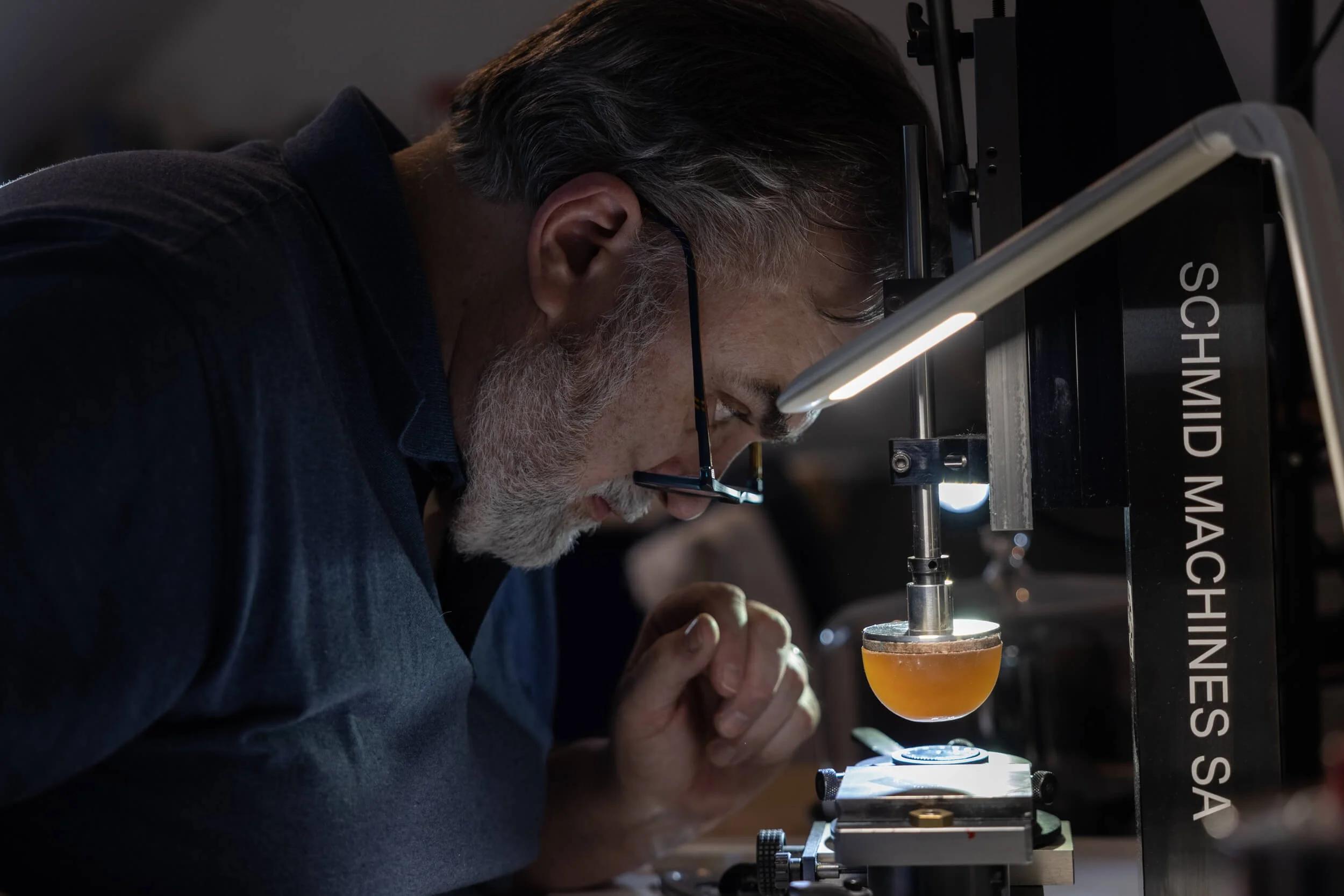
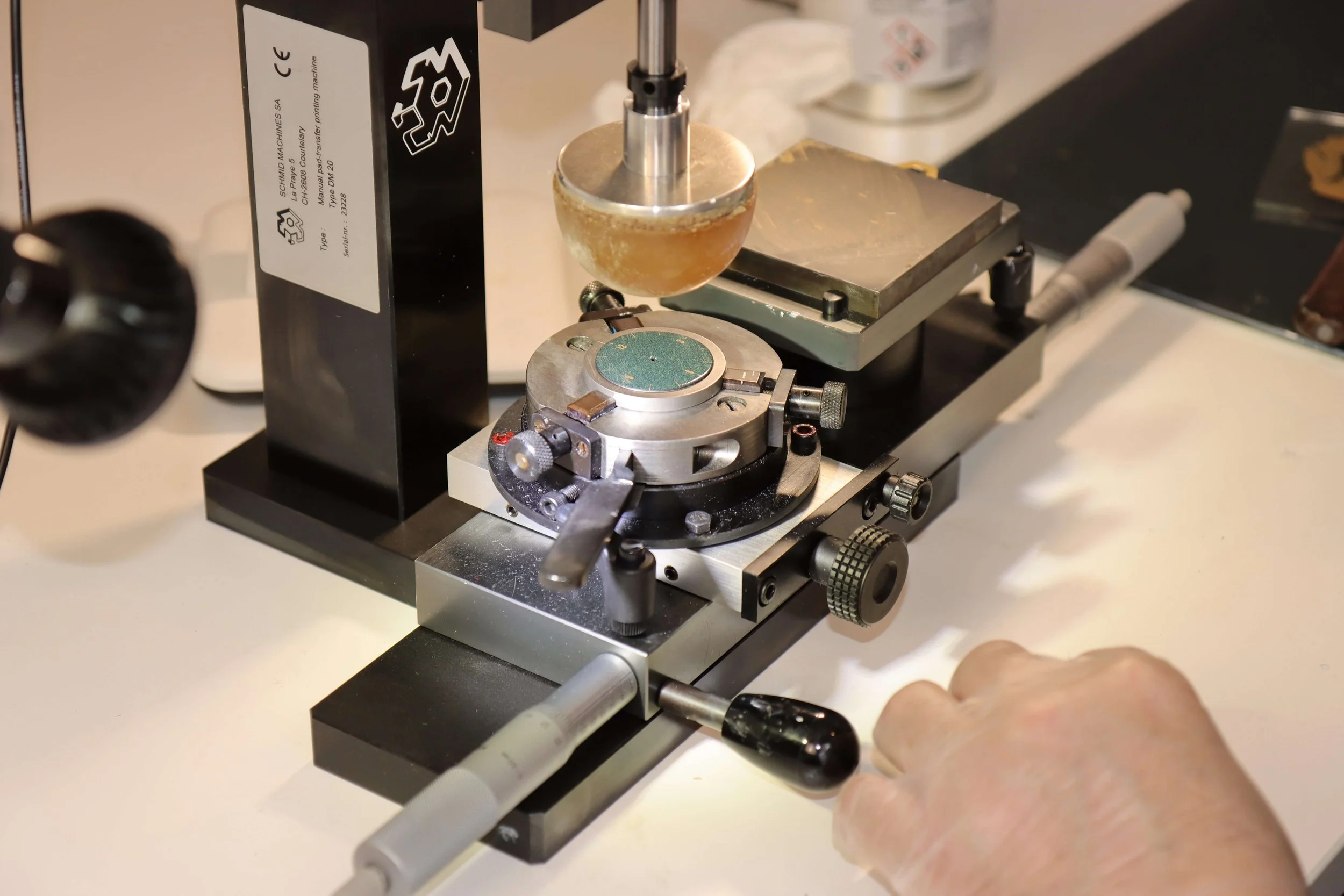
We traditionaly pad print our dials by hand using a Schmid manual printing machine specialy made for us.
We design all our own dial faces to be printed.
Cliches the laser etched plates are made to hold the Berlac inks and Mike transfers the ink from the plate to the dial careful not to crack the enamel. This is an art in itself and is done by feel giving the traditional look Alison wants to achieve in her watches.
Its all coming together
All movements are rebuilt and regulated to Chronometer standards by Alison personally ensuring the highest of standards for our watches. The watch is assembled and the dials are carefully inserted and our designed hands are added.
Alison tests every timepiece for 10 days to check accuracy and adjusts accordingly.
Last but not least our traditionally handmade straps are put on with out own designed buckle new to 2026 pieces.
Every watch comes in a handmade Walnut box to hold your watch.
